
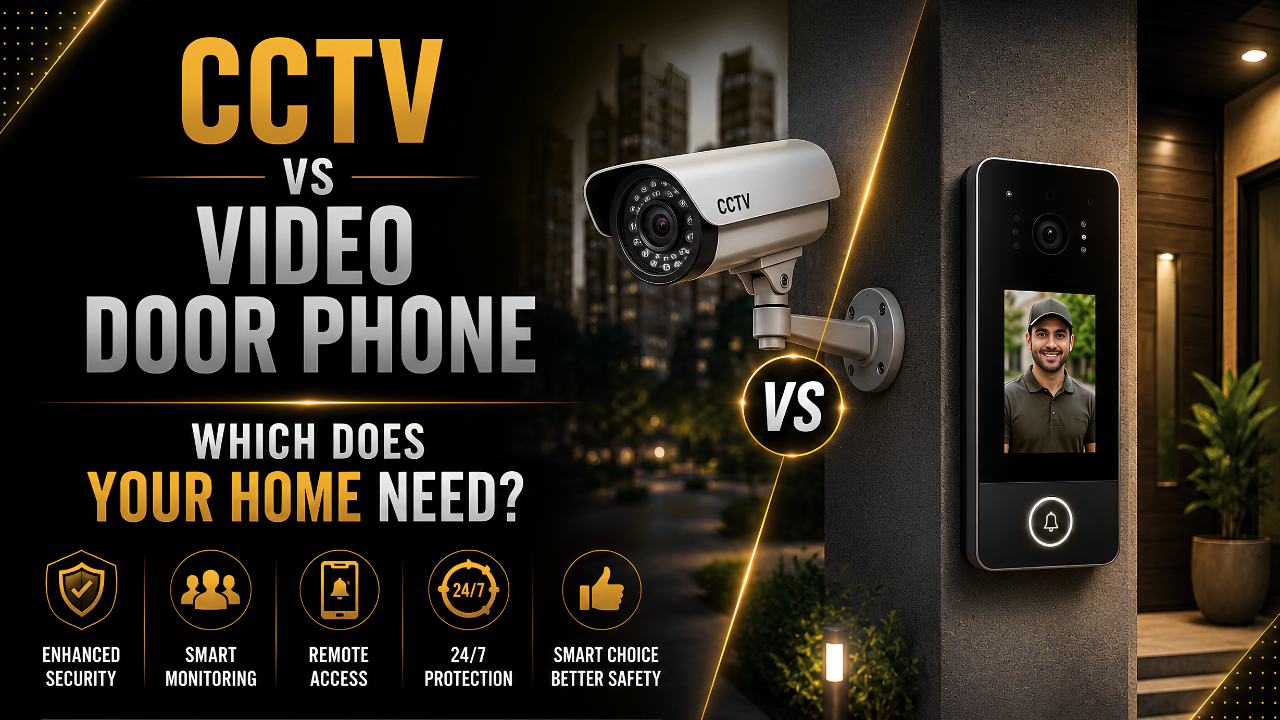
CCTV vs Video Door Phone: Which Does Your Home Need?
Quick answer: A CCTV system watches and records your whole property, while a video door phone lets you see and speak to whoever is at your gate before opening it. CCTV is about surveillance and evidence; a video door phone is about safe entry control. For most Indian homes, the ideal setup uses both together.
When it comes to protecting your home in India, two devices come up again and again: CCTV cameras and the video door phone. They sound similar, and many homeowners assume buying one means they do not need the other. In reality, they solve two different problems.
This guide explains what each device does, compares them side by side, and helps you decide which one, or which combination, is right for your house or apartment.
What Is CCTV?
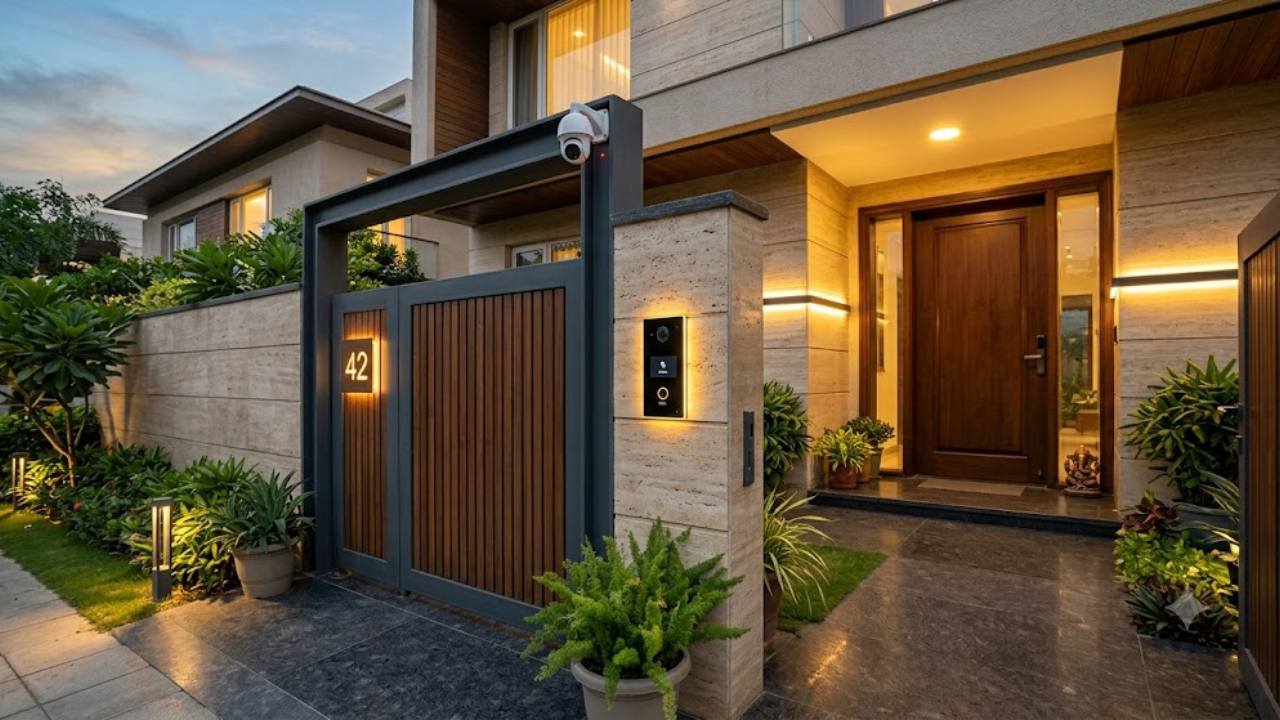
CCTV (Closed-Circuit Television) is a system of cameras placed around your property that continuously record video and store it on a DVR, NVR, or the cloud. The cameras can cover your gate, driveway, boundary wall, parking, terrace, and even indoor areas.
The main job of CCTV is surveillance and evidence. It quietly watches everything, records it, and lets you review footage later or view it live on your phone from anywhere. Modern systems add night vision, motion alerts, and AI features. You can read more about where this is heading in our guide to AI, CCTV and IoT in smart security.
What Is a Video Door Phone?
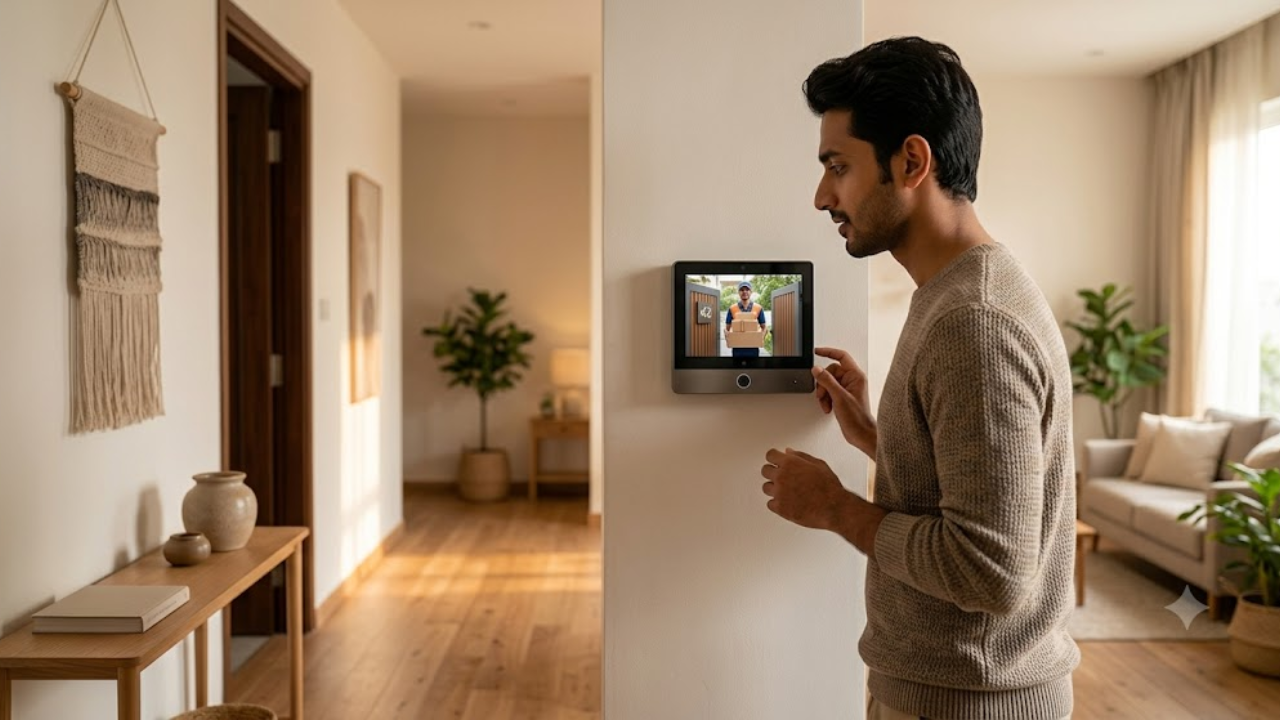
A video door phone (also called a video doorbell or VDP) is a device fixed at your main gate or door with a camera, microphone, and speaker. Inside your home, a screen lets you see and talk to a visitor before you decide whether to open the door.
The main job of a video door phone is entry control. It answers one simple but important question: "Who is at my door, and should I let them in?" This is especially useful for elderly family members, women at home alone, and children, who can verify a visitor without opening the door.
CCTV vs Video Door Phone: Side-by-Side Comparison
| Feature | CCTV | Video Door Phone |
|---|---|---|
| Main purpose | Surveillance and recording of the whole property | Seeing and talking to visitors at the door |
| Coverage | Wide, multiple cameras across the property | Focused on the gate or main door only |
| Two-way talk | Usually not, watches only | Yes, you can speak with the visitor |
| Recording | Yes, continuous footage stored for days or weeks | Sometimes, often only snapshots or short clips |
| Entry control | No, cannot manage who enters | Yes, verify before opening the door |
| Evidence value | Strong, useful for police and insurance | Limited, mainly a visitor record |
| Best for | Overall property security and monitoring | Safe, convenient answering of the door |
| Typical cost (India, approx.) | Higher, rises with number of cameras | Lower, a single unit |
When You Need CCTV
Choose CCTV as your priority if you want to protect the whole property, not just the door. CCTV makes the most sense when you:
- Have an independent house, bungalow, or large plot with a boundary, driveway, and terrace to watch
- Want recorded evidence in case of theft, vandalism, or a dispute
- Travel often and want to check your home live from your phone
- Need to monitor parking, servants' movement, or a shop or office attached to the home
- Want a visible deterrent, since cameras discourage intruders
When You Need a Video Door Phone
Choose a video door phone as your priority if your main concern is safe, convenient entry. It works best when you:
- Live in an apartment or flat where the main risk is who you let in at the door
- Have elderly parents, children, or family members who are often home alone
- Receive frequent deliveries, domestic help, and unknown visitors
- Want to avoid opening the door to strangers, especially at night
- Prefer a simple, single device that is easy to use for everyone in the family
Do You Need Both? Usually, Yes
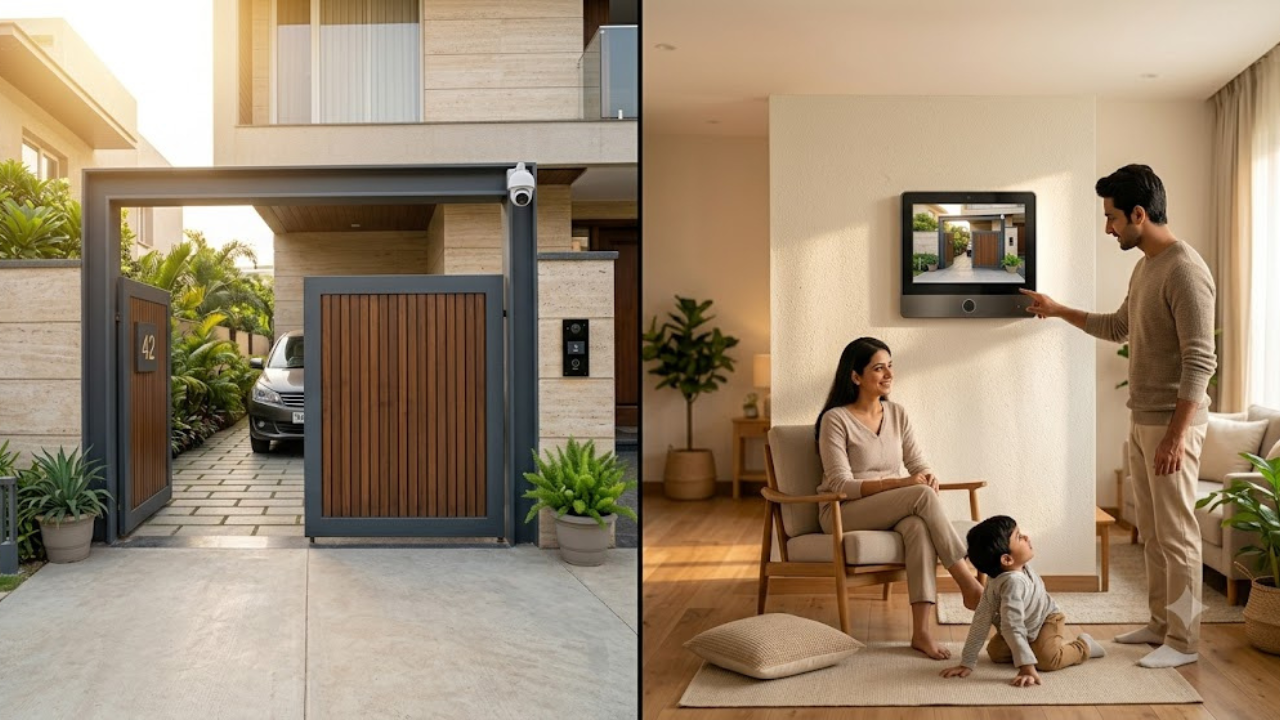
For most Indian homes, CCTV and a video door phone are not competitors, they are partners. Each covers the gap the other leaves:
- CCTV records everything around your property and gives you evidence, but it cannot talk to a visitor or control who enters.
- A video door phone lets you verify and speak to visitors, but it does not watch your boundary, parking, or terrace.
Used together, you get complete protection: the video door phone manages your door safely, while CCTV keeps a continuous watch over the rest of the property. This layered approach is the same principle professionals use when they combine CCTV and security guards for larger properties.
How to Choose for Your Home
Match the setup to your home type and budget:
- Apartment or flat: Start with a video door phone. Add one or two CCTV cameras for the balcony, main door, or parking if needed.
- Independent house or villa: Prioritise CCTV to cover the boundary, gate, driveway, and terrace, then add a video door phone at the main gate.
- Elderly parents living alone: A video door phone is essential for safe answering, with CCTV for family members to check in remotely.
- Home with a shop or office: CCTV is the priority for the commercial area, with a video door phone for the residential entrance.
Whatever you choose, buy from a reputable brand, ensure proper installation, and make sure recordings are stored securely.
A Note on Cost (India, 2026)
Prices vary widely by brand, features, and installation, so treat these as approximate guides only:
- Video door phone: a single unit is usually the more affordable option, making it an easy first upgrade for most flats.
- CCTV: cost depends mainly on the number of cameras, video quality, and storage. A basic multi-camera home setup costs more upfront but covers far more area.
Think in terms of value, not just price. The right question is not "which is cheaper," but "what am I actually trying to protect, the door, or the whole property?"
Conclusion
CCTV and a video door phone are both valuable, but they do different jobs. CCTV watches and records your entire property for surveillance and evidence, while a video door phone gives you safe, convenient control over who comes through your door. If your budget allows only one, choose based on your biggest concern. If you can, use both, because together they give your home complete, layered protection.
For homes, societies, and commercial properties that want professional guidance, GPF also provides trained guards and integrated security services in Gurgaon that work alongside your CCTV and entry systems.
Want Professional Help Securing Your Home?
Gurgaon Protection Force provides trained guards, CCTV-backed monitoring, and integrated security for homes, residential societies, and commercial properties across Gurgaon, Noida, Faridabad, and Delhi. PSARA licensed and ISO 9001:2015 certified since 2012.
Frequently Asked Questions
What is the difference between CCTV and a video door phone?
CCTV is a system of cameras that watches and records your whole property for surveillance and evidence. A video door phone is a single device at your gate or door that lets you see and speak to a visitor before opening it. CCTV is for monitoring; a video door phone is for entry control.
Is a video door phone better than CCTV?
Neither is simply better, they do different jobs. A video door phone is better for safely answering the door, while CCTV is better for watching and recording the entire property. For complete home security, using both is ideal.
Do I need both CCTV and a video door phone at home?
For most homes, yes. A video door phone manages who you let in at the door, while CCTV keeps a continuous watch over the gate, boundary, parking, and terrace. Together they cover the gaps each one leaves.
Which is cheaper, CCTV or a video door phone?
A single video door phone is usually the more affordable option, which makes it an easy first upgrade for flats. CCTV costs more upfront because the price rises with the number of cameras, but it covers a much larger area.
Can a video door phone record video?
Many modern video door phones can capture snapshots or short clips of visitors, but they are not designed for continuous recording. For full-time recorded coverage of your property, CCTV is the right choice.
Which is best for an apartment versus an independent house?
For an apartment, a video door phone is usually the priority since the main risk is who you let in. For an independent house with a boundary, driveway, and terrace, CCTV is the priority, with a video door phone added at the main gate.