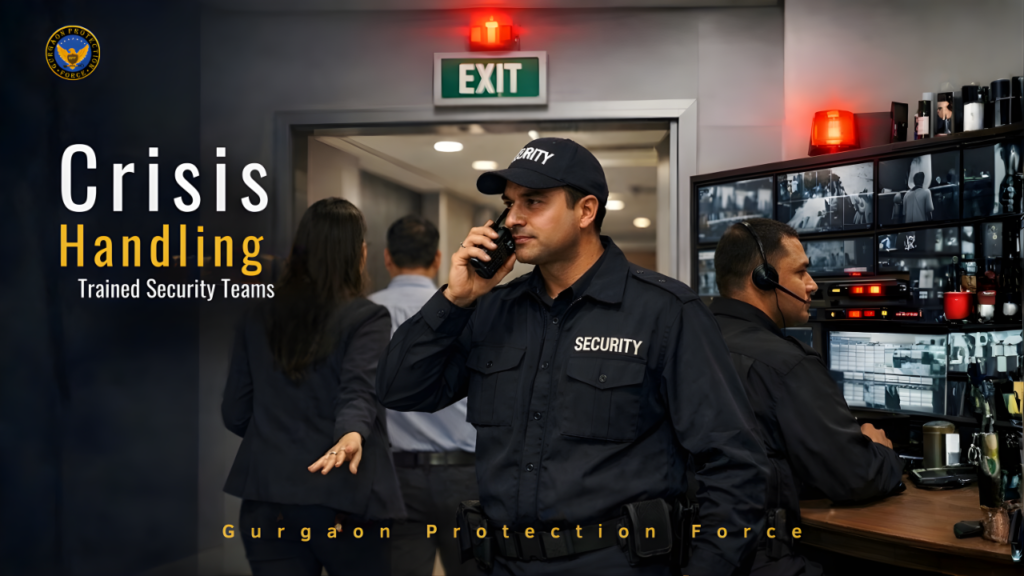
How Trained Security Teams Handle Emergencies and Crisis Situations
Emergencies never announce themselves. A short circuit turns into a fire, a minor argument becomes a violent clash, a sudden medical issue brings operations to a halt. In such moments, machines, systems, and SOPs alone do not help. What actually matters is how fast and accurately a security team reacts on the ground.
This is why businesses today actively look for a professional protective agency instead of basic guard services. Searches like security agency near me, security services Gurgaon, or security guard in Gurgaon are rising because people have seen what happens when emergencies are handled by untrained staff.
Just like a machinist knows that one wrong move can damage an entire production line, experienced business owners know that one wrong response during a crisis can cause massive loss.
Quick Verdict
Trained security teams handle emergencies by acting fast, staying calm, and following tested procedures. They reduce panic, protect people and assets, and restore control quickly. Compared to untrained guards, a professional protective agency minimizes damage, downtime, and legal risk during crisis situations.
Why Emergency Handling Is the Biggest Test of Any Security Team
Many security guards look fine during normal days. Gates are checked, registers are filled, and shifts pass quietly. The real test comes only during emergencies.
Most failures happen because:
- Guards panic
- No one knows who should act first
- Everyone waits for instructions
- Wrong decisions are taken under pressure
For a machinist, this is like running a CNC machine without knowing emergency shutdown procedures. Everything looks fine—until it doesn’t.
A trained security team is built specifically for that moment when things go wrong.
What “Training” Actually Means in Emergency Security
Training is not about marching or wearing uniforms properly. In emergency handling, training means mental readiness.
A trained protective agency focuses on:
- Thinking clearly under stress
- Prioritizing people over property
- Knowing when to act and when to hold
- Communicating without confusion
Untrained guards often react emotionally. Trained teams react logically.
Preparation: What Happens Before Any Emergency
Site Understanding Comes First
Before deployment, trained teams study the site in detail:
- Where are fire hazards?
- Which machines are high-risk?
- Where do people gather?
- What exits are usable during panic?
This is similar to how a machinist studies a machine layout before operating it. Without understanding the setup, accuracy is impossible.
Setup Speed During Emergencies
Why Speed Is Everything
In emergencies, every minute multiplies damage.
- Fire spreads
- Crowds panic
- Medical conditions worsen
- Theft escalates
A trained security team does not “discuss” first. They move instantly.
How Trained Teams Achieve Fast Setup
They rely on:
- Pre-assigned roles
- Clear authority structure
- Rehearsed drills
- Zero confusion about responsibility
One guard controls access, another manages evacuation, another contacts authorities. No overlap, no delay.
Untrained guards usually all rush to the same spot—creating chaos.
Fire Emergencies: Controlled Response vs Panic
Fire is one of the most common emergencies in factories, offices, and residential buildings.
What Untrained Guards Do
- Shout randomly
- Run towards fire without plan
- Cause stampede
- Block exits unintentionally
What Trained Security Teams Do
- Trigger alarm immediately
- Cut power safely (if trained)
- Guide people calmly toward exits
- Use extinguishers only if safe
- Keep access clear for fire brigade
The difference is control. Panic kills more people than fire itself.
Medical Emergencies: The Silent Crisis
Heart attacks, fainting, injuries, and seizures are far more common than people realize.
Trained Security Team Response
- Spot early symptoms
- Call ambulance with exact location
- Provide first aid / CPR if required
- Control crowd around patient
- Keep route clear for medical staff
A trained security guard in Gurgaon often becomes the first responder. Those few minutes before doctors arrive can save a life.
Violence, Theft, and Conflict Situations
Why Force Is Not the Solution
Many people assume security means physical force. In reality, force often makes things worse.
Trained security teams focus on:
- De-escalation
- Isolation of threat
- Protection of bystanders
- Evidence preservation
They understand that controlling a situation is more important than “catching” someone.
Accuracy Levels in Crisis Handling
Accuracy means doing the right thing, not just doing something.
Accuracy Comes From SOPs
Trained teams follow Standard Operating Procedures:
- Clear decision paths
- Defined escalation points
- Documented actions
Untrained guards act on instinct. Instinct is unreliable under stress.
Accuracy Comparison Table (Visual)
Situation | Untrained Guard | Trained Security Team |
Fire | Panic shouting | Calm evacuation |
Medical | Delay | Immediate aid |
Theft | Blind chase | Area isolation |
Violence | Escalation | De-escalation |
Disaster | Confusion | SOP execution |
This accuracy is the same principle machinists follow—precision reduces damage.
Communication: The Hidden Strength of Trained Teams
Emergencies fail mostly because of poor communication.
Internal Communication
- Short, clear instructions
- Radio discipline
- Chain of command
External Communication
- Police with correct details
- Fire brigade with site access info
- Management with real updates
This is why local security services Gurgaon teams outperform distant agencies—they communicate faster with local authorities.
Cost–Benefit Analysis of Trained Security
Why Cheap Security Becomes Expensive
Low-cost guards seem affordable until:
- Insurance claims fail
- Legal cases arise
- Operations stop for days
One emergency can erase years of cost savings.
Cost–Benefit Comparison
Factor | Untrained Security | Trained Security Team |
Monthly Cost | Low | Moderate |
Emergency Loss | High | Low |
Downtime | Long | Short |
Legal Risk | High | Controlled |
Long-Term ROI | Poor | Strong |
A professional protective agency is not an expense—it is risk insurance.
Why Local Security Agencies Perform Better in Emergencies
People searching security agency near me are thinking practically.
Local teams offer:
- Say-to-day site familiarity
- Faster replacement
- Better police coordination
- Quicker decision-making
In emergencies, distance equals delay.
Real-World Ground Experience Matters
Companies like Gurgaon Protection Force focus heavily on emergency readiness through scenario-based training and local supervision—helping businesses regain control faster during real crisis situations.
Visual Comparison: Emergency Readiness
Emergency Area | Basic Guards | Trained Security Teams |
Preparation | None | Risk assessment |
Response Speed | Slow | Immediate |
Panic Control | Weak | Strong |
Authority Handling | Poor | Professional |
Recovery Time | Long | Short |
Businesses often prefer local expertise as one of top 10 security company in gurgaon, which highlights agencies known for strong training, supervision, and emergency response capabilities
FAQs
How do trained security teams manage emergencies better?
They act quickly, follow procedures, and stay calm. Training helps them control panic, protect people, and coordinate with authorities, which reduces damage and restores normal operations faster than untrained guards.
What kind of training helps security teams handle crises?
Emergency training includes fire drills, first aid, evacuation planning, communication protocols, and scenario practice. Repeated real-life simulations prepare guards to react correctly under pressure.
Why is a professional protective agency important?
A professional protective agency reduces legal risk, downtime, and financial loss. Their trained teams manage emergencies logically, ensuring safety, documentation, and faster recovery after incidents.
Are local security services in Gurgaon more effective?
Yes. Local teams respond faster, know the area well, and coordinate better with local police and emergency services—making them more effective during time-critical emergencies.
Can security guards really help in medical emergencies?
Trained guards can provide first aid, CPR, and quick ambulance coordination. Early action before medical professionals arrive often makes a critical difference in survival and recovery.
How does trained security reduce long-term business loss?
By preventing escalation, minimizing downtime, and avoiding legal complications. Proper emergency handling protects assets, people, and business reputation.
Final Conclusion
Emergencies expose weaknesses. They reveal whether your security setup is real or just decorative.
Just as a machinist relies on precision, preparation, and discipline to avoid costly breakdowns, businesses must rely on trained security teams and professional protective agencies to handle crises calmly and accurately.
Security is not about presence—it is about performance under pressure.