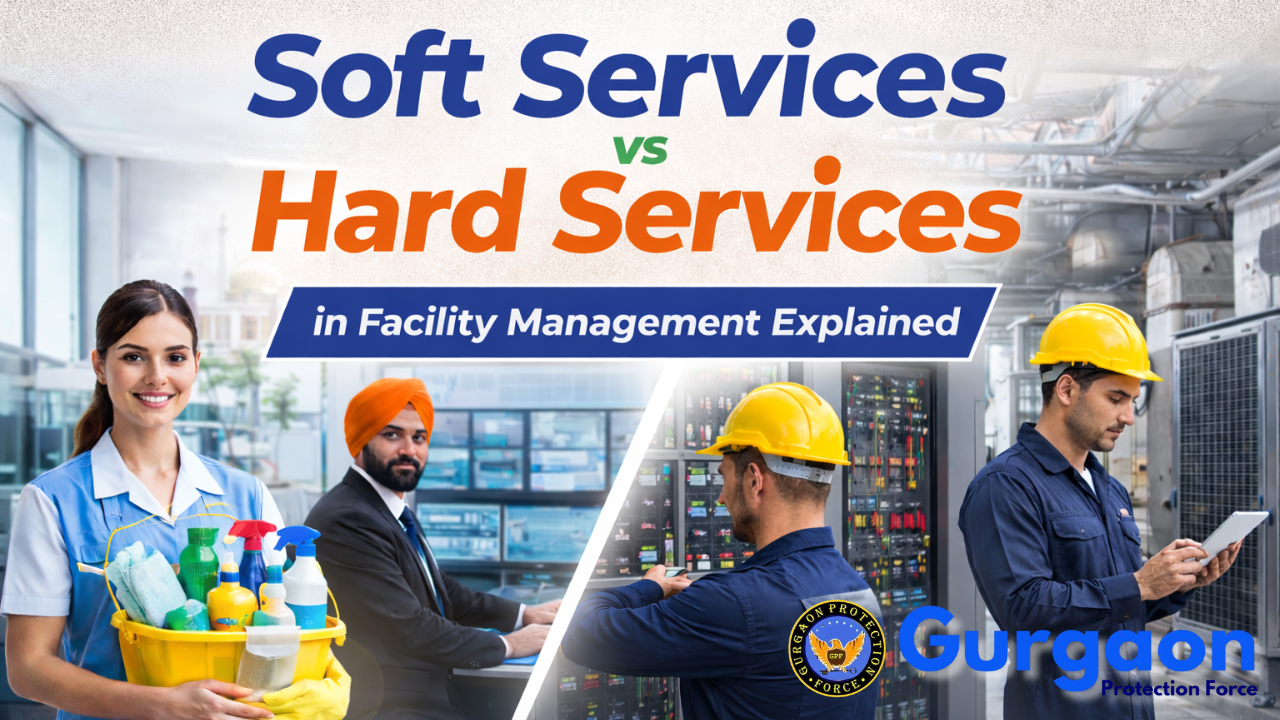
Soft Services vs Hard Services in Facility Management Explained
Facility management is the backbone of any running business. Whether it’s a corporate office, a hospital, a shopping mall, or an industrial site, daily work depends on proper facility management. In India, as the commercial space is increasing, facility management services in India are more important than ever.
A common confusion for many business owners is understanding soft services vs hard services. Both play important roles, but they serve different purposes. In this blog, we will explain soft services and hard services step by step in simple English, so that you can clearly understand how they work together.
Understanding Facility Management Services in India
Facility management services include all activities necessary to maintain a building that is safe, functional, comfortable and compliant. In India, facility management is changing rapidly due to:
- Commercial office and IT park growth
- Increased compliance and safety requirements
- High expectations for hygiene and service quality
To manage this complexity, services are classified into two core categories:
Let’s understand them one by one.
What Are Soft Services in Facility Management
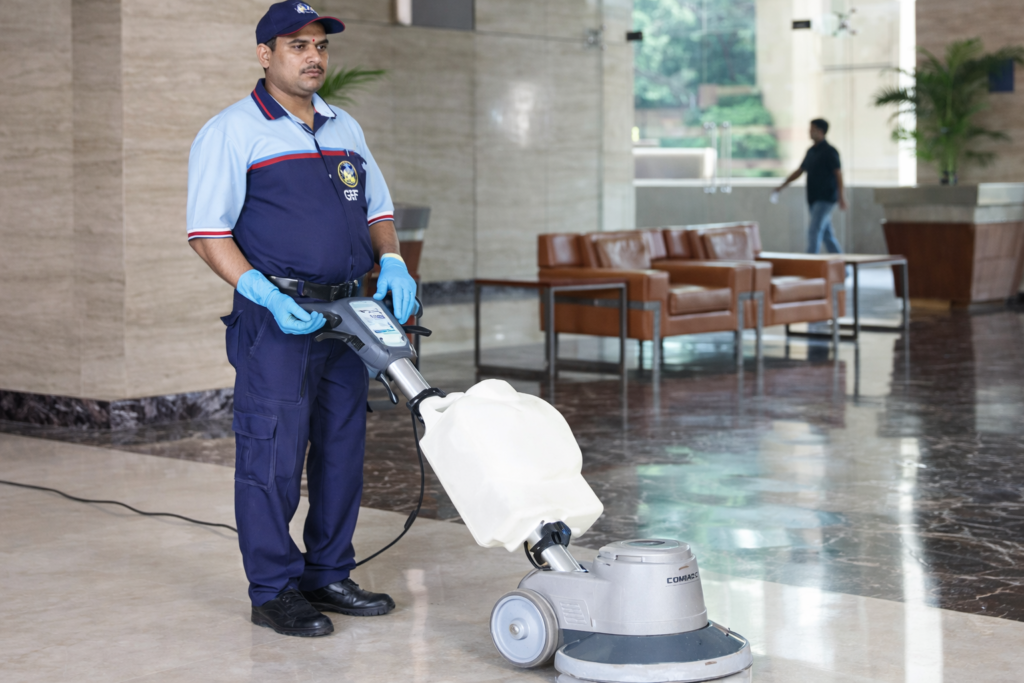
Soft services are people-focused and experience-based services. They directly affect how a facility looks, feels and works daily.
These services usually do not involve heavy machinery or technical systems, but they are necessary for hygiene, comfort and satisfaction.
Examples of Soft Services
Common soft services in facility management include:
- Housekeeping and janitorial services
- paste control service
- Carpet and upholstery are clean
- Floor care services
- Horticulture, garden and green area management
- Façade cleaning services
- Pantry and catering support
- Front office and reception assistance
These services are highly visible and directly affect employee morale, visitor impression, and workplace hygiene.
Benefits of Soft Services
Soft services may seem basic, but their impact is powerful.
Key Benefits
- Creates a clean and hygienic environment
- Improves employee productivity and comfort
- Enhances brand image and visitor experience
- Reduces health risks and absenteeism
- Supports smooth day-to-day operations
How Soft Services Reduce Costs
Many businesses assume soft services are an expense. In reality, they help reduce long-term costs by:
- Preventing health-related productivity loss
- Avoiding damage to interiors and assets
- Reducing customer complaints
- Improving space utilization
What Are Hard Services in Facility Management

Hard services are asset-focused and technically driven services. They deal with the building’s physical infrastructure and critical systems.
Without proper hard services, a facility can face safety risks, downtime, and legal non-compliance.
Examples of Hard Services
Common hard services include:
- Mechanical and electrical maintenance
- HVAC operation and maintenance
- Power support and backup maintenance
- Repair and preventive maintenance
- Building Management Systems (BMS)
- Statutory inspections and regulatory compliance
- Lift operation services
- Technical team support
- Estate management
Hard services ensure that buildings don’t just look good — they work safely and reliably.
Benefits of Hard Services
Hard services are critical for operational stability.
Key Benefits
- Prevents unexpected breakdowns
- Ensures safety and legal compliance
- Extends equipment and system life
- Reduces downtime and emergency costs
- Supports business continuity
In India, regulatory bodies require regular inspections for electrical systems, fire safety, lifts, and power equipment. Proper hard services help facilities stay audit-ready and compliant.
What Is the Difference Between Hard and Soft Management
Hard management focuses on processes, systems and compliance. It depends on technical expertise, schedule and preventive maintenance.
Soft management focuses on people management, communication, service quality and customer satisfaction. It emphasises behaviour, training, and responsiveness.
In facility management, successful organizations balance both methods to ensure efficient operation and a positive user experience.
Business needs both soft and hard services
Today, business needs more than just a working building. They need a safe, clean and well-managed environment where employees can work comfortably, and operations can run without interruption. This is why both soft services and hard services are necessary for every organization.
Hard services take care of the technical and structural needs of a facility. They ensure that essential systems such as electricity, plumbing, HVAC, fire safety and elevators are always working properly. When hard services are managed well, buildings are safe, energy efficient and comply with legal standards. Without them, system failures, safety risks and costly failures can disrupt business operations.
Soft services help those who use the facility every day. Services such as cleaning, security, housekeeping, pest control and front office support help maintain order and comfort. These services create a good working environment, reduce health risks, and increase employee morale and productivity.
Business needs both services because they work together. Technically good buildings without cleanliness or security also cause trouble and risk. Similarly, good housekeeping cannot compensate for a bad electrical or fire safety system. When soft and hard services are together, business operations are easier, problem solving is faster, and facility performance is better.
By investing in both soft and hard services, organisations can reduce long-term costs, improve workplace safety, and project a professional image to employees, clients, and visitors. Together, these services form the foundation of efficient and reliable facility management.
Straightforward: Hard services protect buildings, and soft services protect people. Businesses need to run both safely, easily and professionally.
Why Integrated Facility Management Matters
Facility management services in India are increasingly moving toward integrated models where soft services and hard services are managed together.
Benefits of integrated facility management include
- Better coordination between teams
- Cost efficiency through centralised management
- Consistent service standards
- Faster issue resolution
- Single point of accountability
This approach ensures seamless operations across all facility functions.
Conclusion
It is important to understand soft services vs hard services to make smart facility management decisions. Hard services ensure that buildings, systems and infrastructure work safely and efficiently, while soft services focus on people, cleaning, security and daily operational support. Both are equally important, and when they are managed together, they create a stable, productive and compliant environment.
Businesses that adopt an integrated facility management approach benefit from reduced operational risk, better cost control, better employee experience and long-term asset protection. In India’s growing commercial environment, especially in cities like Gurgaon, facility management is no longer a support function but a strategic necessity.
Organisations seeking reliable, professional facility support can benefit from experienced service providers such as Gurgaon Protection Force (GPF), which offer structured soft services, hard services, and integrated facility management solutions. With a strong focus on security, compliance and service quality, GPF helps businesses maintain safe, efficient and well-managed facilities, while allowing them to focus on growth and core operations.
Frequently Asked Questions
What is the difference between hard and soft services?
Hard services relate to building systems and infrastructure, while soft services focus on people oriented support services like cleaning and security.
What are examples of soft services?
Housekeeping, security, pest control, reception services, landscaping, and waste management are common examples of soft services.
What are the benefits of soft services?
Soft services improve hygiene, safety, employee satisfaction, customer experience, and overall operational efficiency.
How do soft services reduce costs?
They reduce maintenance issues, improve productivity, prevent losses, and allow businesses to outsource non core tasks efficiently.
What are the four types of maintenance in hard services?
Preventive, corrective, predictive, and emergency maintenance are the four main types used in hard services.